Med-core
A Python engine and QGIS plugin. It translates bodies, terrain and effort into iso-effort maps that researchers can use and cities can scale. It also supports cohort analyses.
REACHRethinking Accessibility through an Embodied, Human-Centred Approach
REACH measures urban accessibility in human effort, not only in distance or time — so that cities can be planned for the people who actually live in them.
We measure cities in metres and minutes.
People experience them in their own terms.
A walking radius draws a neat circle. Real life rarely does. Age, fitness, terrain and the things we carry all change how far we can comfortably go.
REACH — Rethinking Accessibility through an Embodied, Human-Centred Approach — asks what happens when the person becomes part of the measure.
A city understood through the capabilities of the human body.
Urban Ergonomics reframes accessibility as a relationship between people and urban conditions. It brings age, fitness, terrain and everyday effort into the picture — with MED as a measure of that effort.
Explore the measure ↓The Metabolic Equivalent of Distance (MED) expresses distance in physiological effort. One MED-metre represents the effort of a reference body walking one flat metre. Equal MED means equal effort — while the distance changes.
Set a body and a street. See how a reference 400-metre walking budget translates into distance at the same physiological cost.
This matches the reference body behind the 400 m standard.
A simplified version of the REACH model. Harris–Benedict · MET correction · Minetti slope · surface & load. Walking speed: 4.8 km/h. Reference: male, 35 years, 80 kg, 175 cm, moderate fitness, flat asphalt, no load. The graphic is schematic; this demonstration is not a validated personalised assessment.
A Python engine and QGIS plugin. It translates bodies, terrain and effort into iso-effort maps that researchers can use and cities can scale. It also supports cohort analyses.
Testing MED predictions against GPS-tracked activity spaces in Barcelona, across different bodies and demographic groups.
A framework to reveal where conventional standards overestimate access — and whose everyday experience is being overlooked.
urbanergonomics.eu introduces the project, the Urban Ergonomics framework and an interactive demonstration of the Metabolic Equivalent of Distance.
The Marie Skłodowska-Curie Postdoctoral Fellowship begins at ISGlobal Barcelona, with a secondment at TU Delft.
The proposal is selected for funding under the Marie Skłodowska-Curie Postdoctoral Fellowships, scoring 99.4/100 and ranking in the top 1% of evaluated proposals.
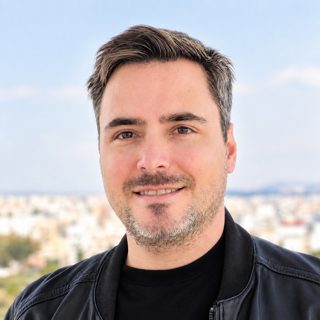
Architect and urban planner. PhD, National Technical University of Athens, 2023. MSCA postdoctoral researcher at ISGlobal Barcelona. Researching physiological-effort accessibility. Related patent granted in Greece; European and US applications pending.
Research Professor, ISGlobal.
Climate, Air Pollution, Nature and Urban Health.
 ISGlobal Barcelona Barcelona / Main host
TU Delft.
Urban Analytics.
 TU Delft The Netherlands / Secondment