Med-core
A Python engine and QGIS plugin. It translates bodies, terrain and effort into iso-effort maps that researchers can use and cities can scale. It also supports cohort analyses.
REACHRethinking Accessibility through an Embodied, Human-Centred Approach
REACH measures urban accessibility in human terms, so that cities can be planned for the people who actually live in them.
We measure cities in metres and minutes.
People experience them differently.
A city understood through the capabilities of the human body.
Urban Ergonomics reframes accessibility as a relationship between people and urban conditions. It brings age, fitness, terrain and everyday effort into the picture — with MED as a measure of that effort.
Explore the measure ↓The Metabolic Equivalent of Distance (MED) expresses distance in physiological effort. One MED-metre represents the effort of a reference body walking one flat metre. Equal MED means equal effort — while the distance changes.
Set a body and a street. See how a reference 400-metre walking budget translates into distance at the same physiological cost.
This matches the reference body behind the 400 m standard.
A simplified version of the REACH model. Harris–Benedict · MET correction · Minetti slope · surface & load. Walking speed: 4.8 km/h. Reference: male, 35 years, 80 kg, 175 cm, moderate fitness, flat asphalt, no load. The graphic is schematic; this demonstration is not a validated personalised assessment.
A Python engine and QGIS plugin. It translates bodies, terrain and effort into iso-effort maps that researchers can use and cities can scale. It also supports cohort analyses.
Testing MED predictions against GPS-tracked activity spaces in Barcelona, across different bodies and demographic groups.
A framework to reveal where conventional standards overestimate access — and whose everyday experience is being overlooked.
urbanergonomics.eu introduces the project, the Urban Ergonomics framework and an interactive demonstration of the Metabolic Equivalent of Distance.
The Marie Skłodowska-Curie Postdoctoral Fellowship begins at ISGlobal Barcelona, with a secondment at TU Delft.
The proposal is selected for funding under the Marie Skłodowska-Curie Postdoctoral Fellowships, scoring 99.4/100 and ranking in the top 1% of evaluated proposals.
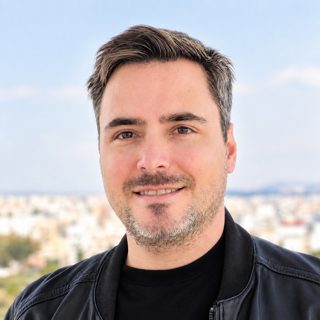
Architect and urban planner. PhD, National Technical University of Athens, 2023. MSCA postdoctoral researcher at ISGlobal Barcelona. Researching physiological-effort accessibility. Related patent granted in Greece; European and US applications pending.
Research Professor, ISGlobal.
Climate, Air Pollution, Nature and Urban Health.
 ISGlobal Barcelona Barcelona / Main host
TU Delft.
Urban Analytics.
 TU Delft The Netherlands / Secondment